

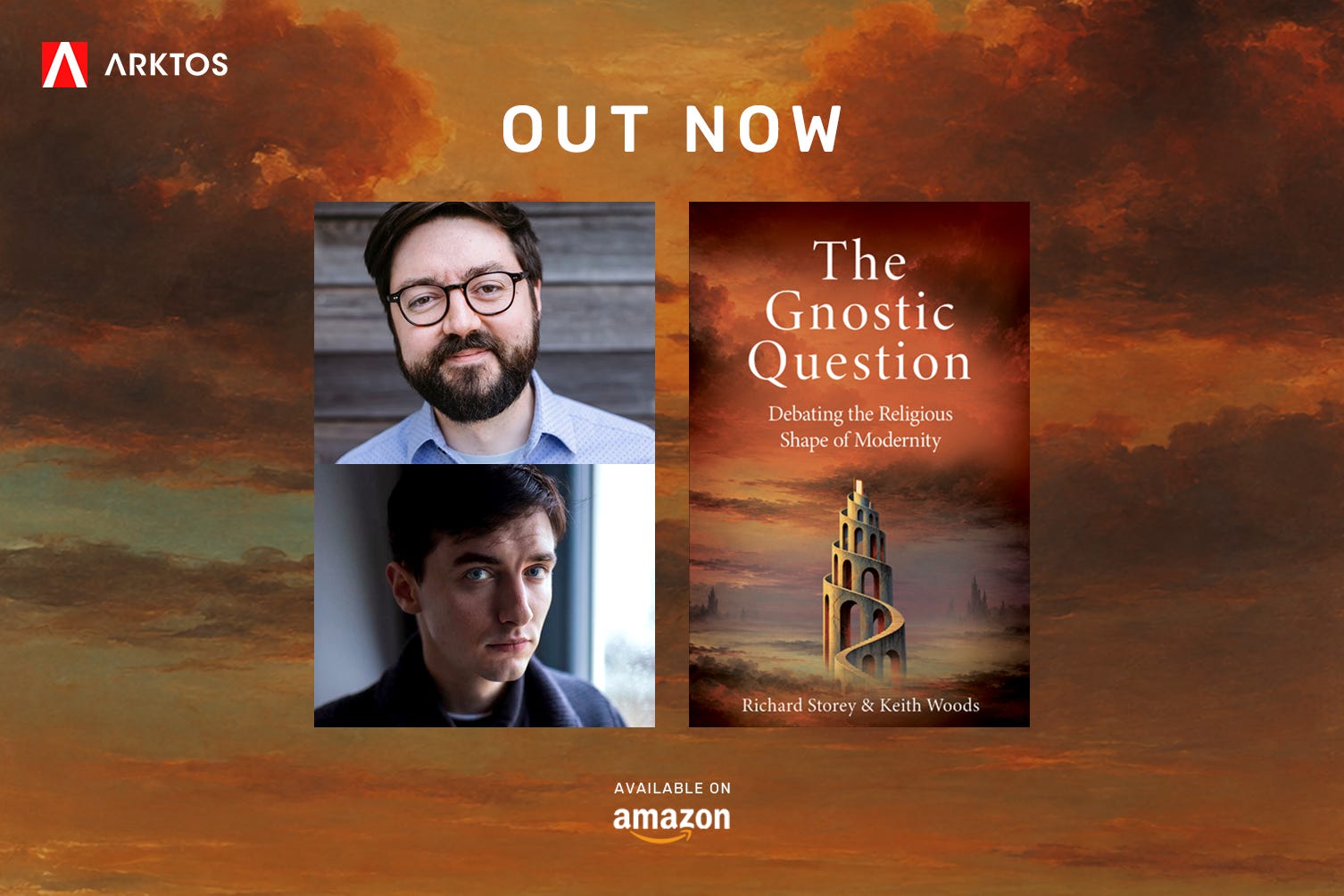
I am delighted to announce the release of The Gnostic Question, a book I have co-authored with Richard Storey.
This is a bit different from the other books I’ve released, focusing more on philosophy and the deeper intellectual trends of modernity than on politics. My own academic background is in philosophy and I originally began making content to focus on some of these deeper intellectual trends I felt were neglected, so it has been particularly rewarding to return to this topic and finally develop a sustained defence of my own thesis on the origins of the modern worldview I have spent so much time criticising. I believe an understanding of these questions is essential to properly understanding the moment we find ourselves in.
The book opens with a wide-ranging essay by Richard Storey, bringing together and substantially revising his earlier writings on the Gnostic roots of modernity. Storey presents some interesting history of the influence of esoteric movements on the intellectual development of the modern world, and puts forward an argument that the spiritual impulse of contemporary progressivism is fundamentally gnostic, as an individualist, voluntarist revolt against the given order of nature, culminating in transhumanism.
I also believe progressivism has the character of a pseudo-religion directed towards a transhumanist utopia, but I strongly disagree with Storey and other post-liberal and Catholic thinkers who have termed this impulse “Gnostic.” My response essay, “Gnosticism or Prometheanism? Modernity and the Conquest of Nature,” puts forward the arguments I first made on this topic in a series of videos and livestreams in 2022. Here, I argue that this progressive impulse really follows from a handful of presuppositions rooted in naturalism and a mechanistic view of nature, combined with some post-Christian moral axioms about the dignity of the individual and faith in human autonomy. These assumptions, combined with the moral relativism of our age, lead to an understanding of progress as the freeing of the autonomous ego from external constraints: first, the immediate constraints of nature like hunger and disease are overcome, then the constraints of collective obligations and prejudice, leading to a conception of moral progress as a Promethean conquest of all that is external to the self.
Richard writes a couple of interesting responses, including a fascinating essay titled “Is Wokeism a Religion?”, in which he argues that contemporary progressivism is no longer merely an ideology that resembles religion but has itself become a genuine form of religious belief, complete with its own moral absolutes, conception of salvation, and faith in human self-transcendence. My next contribution traces the genealogy of this kind of conservative argument more closely, examining the arguments about Gnostic modernity made by Eric Voegelin and others, and what I see as the flaws in these analogies. I also examine the actual beliefs of contemporary heralds of the transhumanist movement, like Yuval Noah Harari, to show how their vision follows quite naturally from their materialist and liberal pluralist assumptions. One of my more provocative arguments is that many of the features identified as “Gnostic” in these belief systems have much closer parallels in orthodox Christianity, particularly its teachings on the equality of souls, the providential direction of history, and the hope of a future redemption of the world.
Finally, I sketch a more positive vision which unites the philosophical views of myself and Richard. In “The Return to Form,” I argue that the naturalistic assumptions which overturned the conception of the cosmos and man’s place within it handed down by classical metaphysics have themselves been fatally undermined by developments in modern science. Though I argue the static, natural law picture put forward by some religious writers is untenable after Darwin, my key argument is that we cannot now have a coherent picture of nature without a return to teleology and a vision of the cosmos as a dynamic, intelligible order in which purpose and value are not merely subjective projections of the human mind, but real features of nature itself.
Accepting this has profound implications for how we understand humanity and our place in the world, and offers a way out of modern relativism without an appeal to religious orthodoxy. Though Richard and I do not share the same religious assumptions or quite the same diagnosis of our ills, we share a conviction that the modern worldview is inadequate and that we must recover a richer understanding of nature and our place within it. I hope the book offers readers an interesting starting point from which to think differently about these questions.
On the point of contributors, I am very proud to see some towering intellectual figures offer words of praise for the book. This includes John Milbank, one of the world’s most influential theologians and the founder of the Radical Orthodoxy movement, and Frank van Dun, a legal philosopher who has been credited with helping revive natural law theory. It also features a thoughtful reflection from Dr. Paul Tyson, a philosopher whose excellent book Defragmenting Modernity helped shape the way I think about the same questions discussed here. The afterword is provided by my good friend and frequent collaborator, Tyler Hamilton.
It is a great honour to have such distinguished thinkers contribute to a book I’ve co-authored, to share its pages with Richard, and to have our work published by Arktos. I hope the book makes a worthwhile contribution to these discussions, particularly by introducing them to readers who might not ordinarily engage with philosophical questions of this kind. Indeed, I think one of its particular strengths is that it has something to offer both those who have wrestled with these questions for years and those encountering them for the first time. It is certainly the most philosophically ambitious book I have worked on, and I am very pleased to finally share it.
The Gnostic Question: Debating The Religious Shape of Modernity is available now on Amazon. (Don’t forget to change to your region!)
If you purchase the book on Amazon, please help us by leaving a five star review.
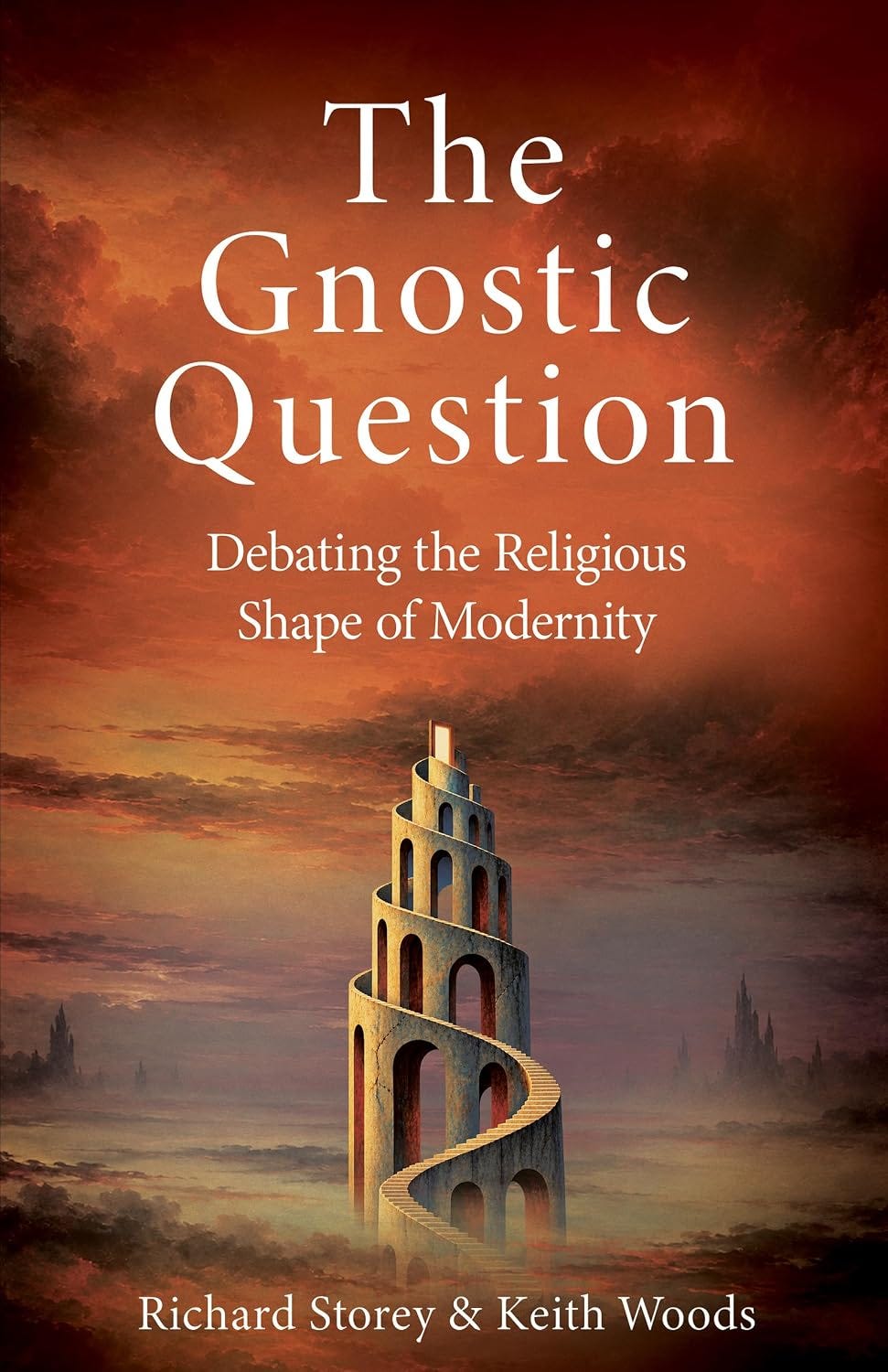
The honour and pleasure were entirely mine, Keith. Your cordiality, humour and diligence pioneered and settled valuable common ground here.
I hope this project, if nothing else, serves as an example to others on the right.
Sounds very interesting.
I also like your idea of breaking with Vögelin by not linking every modernist movement to ancient Gnosticism. Christianity's roots itself do not only come of platonizing it's jewish heritage into what we call gnosticism, but much more of beeing a jewish apocalyptic mystery cult.
The end times parusia for the coming messianic kingdom on earth, which was and still is so characteristic for this ancient religious movement, we can so easily identify in its secularized form in the history of modernism, when we look at movements like Marxism's proletariat revolution, the democratic end of history, climate change and so much more.