

This essay was originally published in the December 2025 edition of Chronicles Magazine.
If you’ve lived in Ireland for any length of time, you’ll have noticed the political consensus here is extremely left-wing. Of course, that’s true of all Western countries, but looking at some objective measures it’s clear Ireland outdoes many of its neighbours in this respect.
First and most obviously, Ireland has no large right-wing populist party. There is not one elected member of parliament who could really be described as a nationalist or a right-wing populist. The two historically dominant parties, Fianna Fáil and Fine Gael, were traditionally considered centrist or non-ideological parties, with Fine Gael leaning more right of centre. Now, no one seems to know what the ideological difference is between them or why they exist as distinct parties, as both have embraced a progressive consensus that is decidedly left of centre. The four main opposition parties: Sinn Féin, Labour, the Green Party and the Social Democrats are all leftist parties.
When I first began following politics in Ireland, a common criticism of our system was that we had moved closer to Washington than Berlin in how we approached welfare and taxation, with our welfare state underfunded because of a preference for vote-winning tax cuts.
Now, Ireland’s spending on welfare and redistribution as a share of all spending is the highest in the OECD, at 58%.
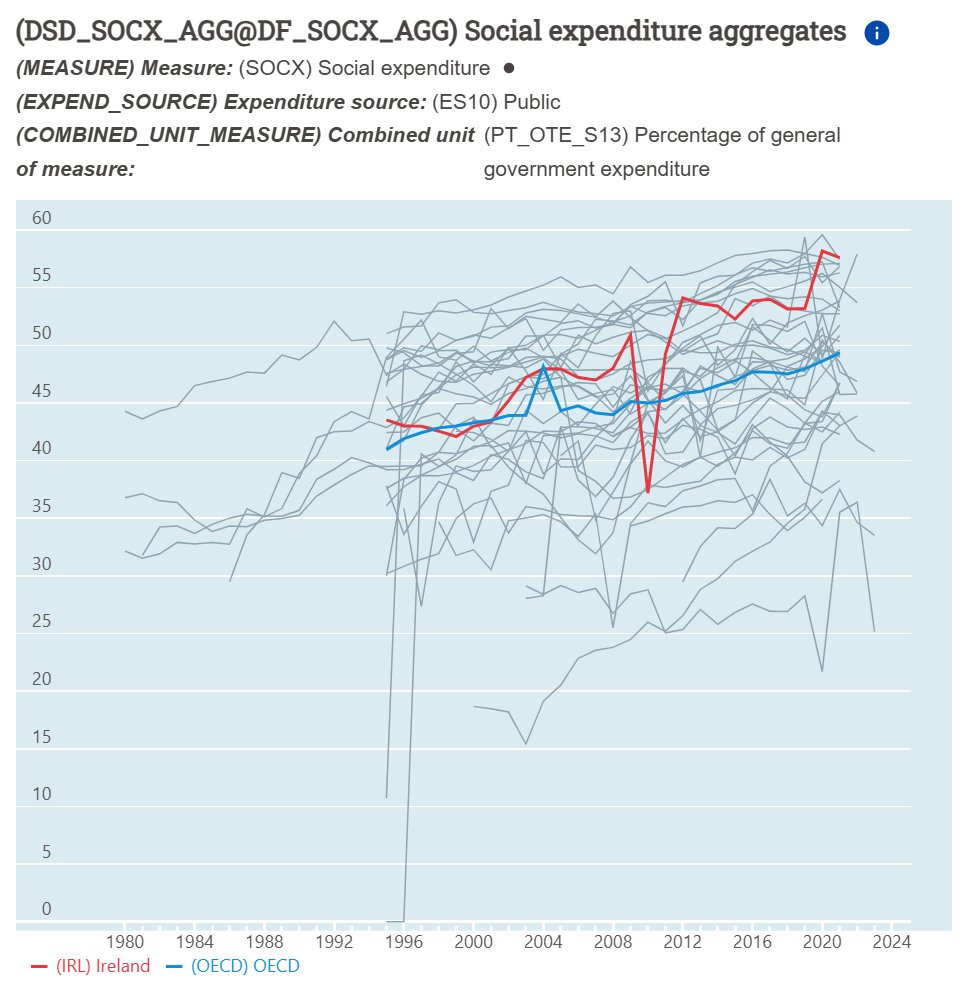
Despite being criticised for favouring tax windfalls over public investment, Ireland’s ruling parties have created what is arguably the most progressive income tax system in Europe. A single person with average earnings in Ireland pays a marginal tax rate of 49.5 per cent: the third highest in the OECD
Ireland’s European Parliament representation of over 20% of elected MEPs belonging to the hard left bloc is the highest in Europe. Ireland just elected as its new President Catherine Connolly — a former Labour Party politician and long-time advocate of leftist causes — in a landslide victory. Though her campaign celebrated this as a victory for a “new Ireland,” Connolly is a continuity candidate, succeeding another ideological leftist and former Labour party politician who has praised the communist experiments in Cuba and elsewhere.
The failure of the nationalist right or any kind of populist force to make inroads in modern Ireland has been well noted. No doubt, a lot of this is due to the lack of cohesion of the right and the failure its leadership (read more here and here,) but the fact is the Irish public has been given populist alternatives and rejected them time and again.
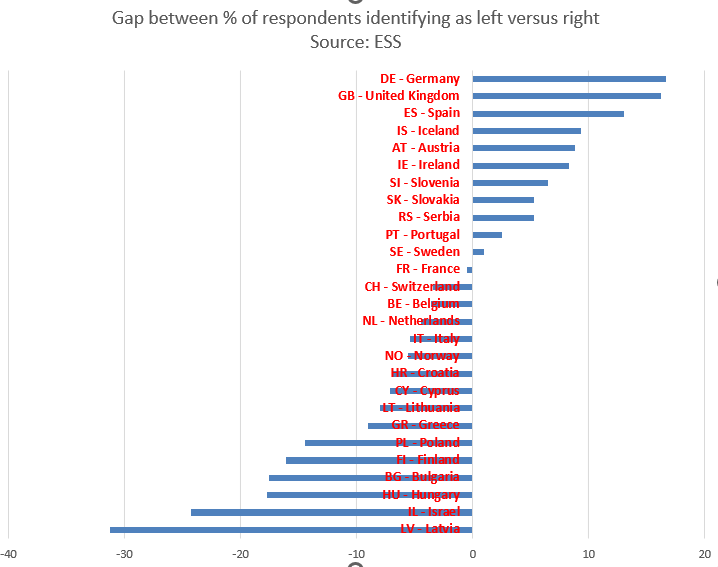
In polling on voter attitudes, Irish voters rank very high in their leftism, yet even the countries ranked above them like Germany and Spain have large, electorally successful populist parties who can viably challenge for government. In Ireland, a party with the policies of AfD or Vox would be considered on the furthest fringe of the political spectrum.
This is not a paywall. Subscribe to my mailing list to continue reading.