


One consequence of the massive turn against Israel since October 7 has been a renewed interest in radical politics. For many people, the war and its aftermath produced their first sustained encounter with the Jewish Question: Jewish political organisation, Zionist influence and the extent to which Western governments privilege Israel’s interests. Because serious discussion of these subjects remains largely taboo within establishment centrism, those seeking more fundamental explanations have often ended up in either far-left or dissident-right political spaces.
This has brought people from very different ideological backgrounds into the same online conversations. Leftists and nationalists now appear on the same programmes, condemn the same lobby and oppose the same wars. Figures associated with the right increasingly use the language of oligarchy, class solidarity and universal liberation, while sections of the left praise right-wing populists for challenging Israel and the foreign-policy establishment. This convergence has encouraged the belief that the old left-right division is becoming obsolete and that a new alliance can be constructed around opposition to Zionism, war and elite corruption.

The Enemy Of My Enemy
There has always been room on the right for humanitarian sympathy towards the Palestinians. Pat Buchanan combined an America First criticism of Washington’s pro-Israel policy with concern for Palestinian civilians. This followed from non-interventionism and national interest, not from a left-wing conception of Zionism. Ironically, I have for years been accused of “third worldism” and attempting to ally with the left for simply expressing similar opposition, and for defending nationalist principles of international order.
But much of the discourse since October 7 is different. The radical left opposes Zionism because Israel privileges one people, maintains an ethnic conception of national membership and uses political power to preserve a Jewish majority. It interprets the conflict through racist settler colonialism and the opposition between oppressor and oppressed. Something like Palestinian identity may be legitimate because it belongs to a dispossessed group engaged in resistance, but European assertions of national continuity remain forms of racism. Many attracted to the dissident right through anti-Zionism now affirm some of these talking points.
A nationalist criticism of Zionism begins from a completely different premise. It does not deny that Jews constitute a people, possess collective interests or naturally organise to advance them. The objection is that Western governments privilege Israel’s interests over those of their own nations, while Jewish ethnocentrism is treated as legitimate and equivalent organisation by Europeans is condemned.
The real question is not whether someone opposes Zionism, but why. Do they oppose Jewish national preference because they reject national preference universally, or because another people has exercised it through their political system at the expense of their own people? Do they want Israel subjected to the same post-national order imposed upon the West, or do they want Western nations permitted to exercise the same unapologetic preference for their own continuity?
Many people radicalised since October 7 have never confronted this distinction. They arrived through outrage at a particular injustice rather than through a developed understanding of political order. After entering dissident-right spaces, they often retain the left’s moral grammar around nationalism, colonialism and racism. Anti-Zionism by itself is politically indeterminate, and the differences between Islamists, humanitarian liberals and nationalists are too great to sustain any durable political alliance. These differences cannot be overcome by saying that other political questions can be deferred until the common enemy has been defeated. A serious political alternative takes years or decades to build, and throughout that process it cannot avoid taking positions on the same cultural questions that divide left and right.
I have previously argued that ideology is more important for the success of a political movement that merely rationalising power after it has been won. A movement must share some positive vision of the order it intends to create before it can organise seriously for power. No coalition can organise for power around a single grievance and leave its programme for government to be decided after victory. There is no plausible future in which Nick Fuentes, Hasan Piker and Tucker Carlson win power through a party of “anything other than Zionism” and then amicably separate into rival political movements.
Left and Right
At bottom, the left-right split concerns attitudes to inequality. I favour Alain de Benoist’s formulation that the right is an attitude that consists of seeing the world’s diversity and the relative inequalities that arise from it as good, and the progressive homogenisation advanced by egalitarian ideology as an evil. The left begins from the opposite presumption: inequalities rooted in inherited distinctions require justification and should, where possible, be overcome. Its characteristic conception of freedom is Promethean and emancipatory, seeking progressively to convert unchosen conditions into matters of individual choice.
This fundamental division has taken different and messy political forms. In the post-war West, it was expressed primarily through the conflict between interventionist social democracy and market-oriented liberalism. Here, the split was over the good of equality vs. inequality in the economic sphere, with social issues still subject to a broad consensus and states still generally understood as the political expression of a particular nation and national group.
If the left is defined simply by state intervention and the right by free markets, as someone like Ben Shapiro insists, then contemporary Western politics becomes unintelligible. Since at least the 1990s, centre-left parties have accepted privatisation, flexible labour markets, global trade and the discipline of international capital. Centre-right parties have accepted large welfare states, extensive regulation, anti-discrimination law and the use of government to shape social outcomes for decades. Neither side proposes a return to the economic order with which it was historically associated.
As I have argued elsewhere, the old social-democratic left and neoliberal right have largely converged upon a social-liberal centre. This settlement combines a market economy with an interventionist state, a large NGO sector, moderate redistribution, cultural pluralism and universal human rights.
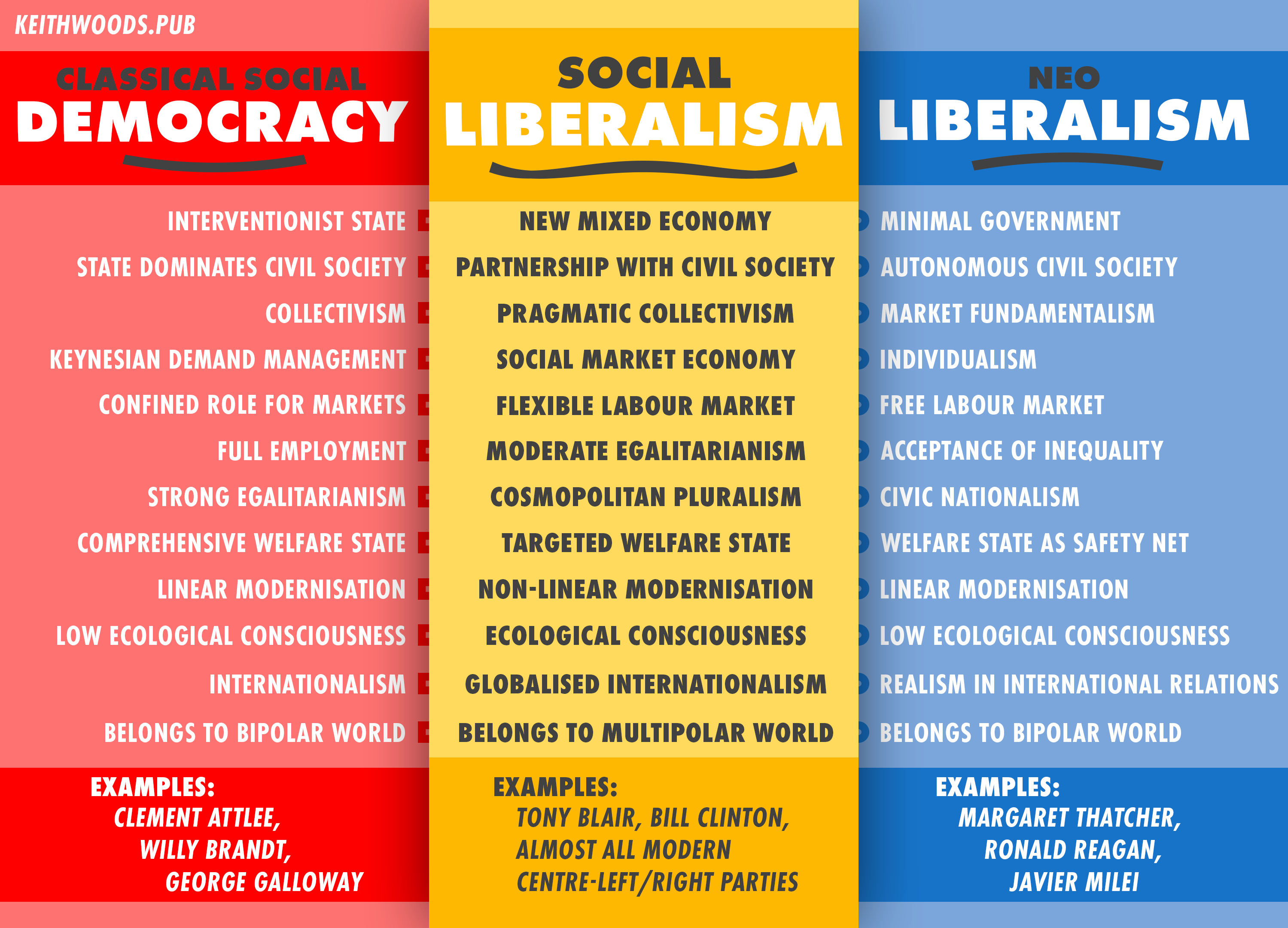
The social-liberal convergence has not abolished the distinction between left and right. The left’s objects of emancipation have simply changed. The old left concentrated on the exploitative relationship between the wealthy and the lower classes. Since the twentieth century, it has increasingly treated all inherited identities like race and sex not as natural destinies carrying legitimate social obligations, but as categories whose meanings are socially constructed illusions to be transcended.
This does not mean that the contemporary left regards race and sex as politically unreal. On the contrary, it often makes these identities intensely salient as structures of oppression while denying that they possess any fixed natural meaning or normative authority. Race may be treated as a social construction while racial disparities remain central to political analysis. Biological sex may be acknowledged as a collection of physical characteristics while being denied the authority to determine social identity, behaviour or obligation. The categories remain politically powerful precisely because their inherited consequences are understood as things from which individuals must be liberated.

The economic form taken by this project can vary. The “abundance movement”, for example, supports deregulation and technological expansion as means of overcoming scarcity and enlarging individual autonomy. Ben Shapiro would presumably consider these policies right wing, yet nobody regards Ezra Klein, Matthew Yglesias or Gavin Newsom as members of the new right. Obviously, economic instruments only acquire their political character from the conception of society and freedom they are intended to serve.
Culturally, however, the left is far more coherent. Its different factions broadly agree on multiculturalism, anti-racism, feminism, expansive LGBT rights and the moral equality of different forms of identity and belonging. They also share a suspicion of any political claim based upon ancestry or ethnocultural continuity, especially from White people.
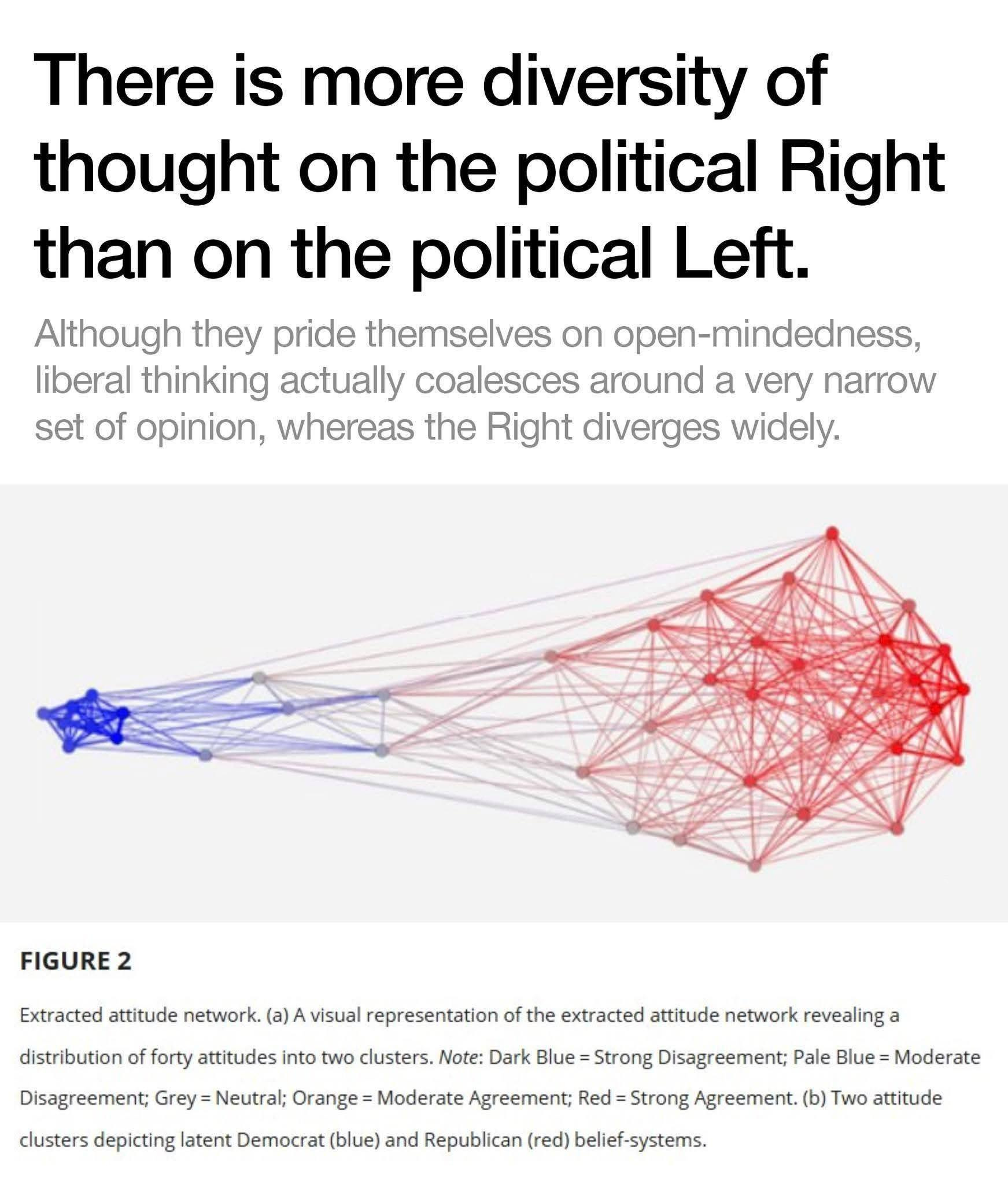
Insofar as studies show much greater diversity of attitudes to various topics among those on the political right, this is because leftists possess a common moral grammar of equality and emancipation that can be applied across issues, whereas the right contains traditions beginning from very different moral premises, whether Christian, racialist or pagan. That the left’s cultural consensus survives otherwise bitter disputes over economics and foreign policy shows how fundamental it is. Equality and “social justice” are not positions leftists happen to hold alongside their other views, but the deepest moral premises through which they understand politics itself. Yet these are precisely the commitments that advocates of a left-right alliance need the left to abandon.
The National Question
The left-right split is so fundamental because it concerns the identity of the political subject itself. For nationalists, the nation is not simply the collection of individuals residing within a particular territory at a particular moment. It is an intergenerational, ethnocultural community possessing kinship, a historic homeland and a legitimate interest in its own continuity. Political institutions belong to this people in a meaningful sense and should give priority to its survival and flourishing.
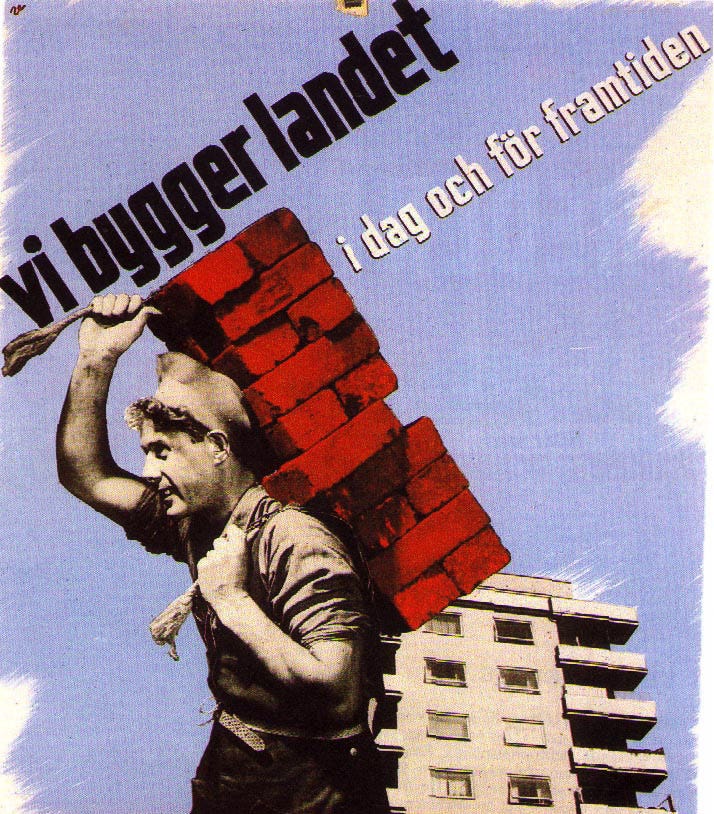
In earlier decades, this question could remain partly obscured. Although there were prominent communist parties that promised a utopian future without nations, Western societies were sufficiently homogeneous that mainstream politics could address an apparently undifferentiated citizenry while taking the existence of the historic nation for granted. Even the post-war welfare state’s language of universal citizenship operated within national boundaries and depended upon an inherited degree of solidarity. Sweden’s post-war society was built on the Social Democratic ideal of the folkhemmet, or the “people’s home”, which imagined society as a national household in which everyone contributed and everyone was cared for. Its egalitarianism was universal within the Swedish people, rather than an abstract obligation owed equally to the whole world. The model did not need to emphasise its national boundaries because the existence and relative homogeneity of the national community were still largely taken for granted.
Decades of mass immigration have made it impossible simply to recover this kind of politics while leaving the national question unspoken, especially now that minority groups are already engaged in organised identity politics. The post-war legal order was built on institutional pluralism and safeguards against nationalism. Once minorities establish institutions through which to pursue their collective interests, there is no longer the illusion of neutrality against an undifferentiated citizenry. Western regimes have increasingly tied their legitimacy to safeguarding liberal pluralism, while minority institutions have become established participants in the competition for political influence and collective recognition.
Under these conditions, appeals to colour-blind individualism do nothing to remove identity from politics. They merely ask the historic majority to abstain from collective organisation while other groups continue to organise, lobby and vote with some consciousness of their shared interests. The choice is no longer between a society governed by identity and one in which identity is politically irrelevant. Identity politics is already a permanent feature of diverse Western societies. The question is whether the historic majority alone will be denied the right to recognise itself as a group possessing collective interests.
The contemporary left increasingly conceives “the people” not as the historic nation but as a coalition of groups united by their subordinate position within existing relations of power. Racial minorities, migrants, women, sexual minorities and other officially protected groups become political agents through their experience of exclusion, while the historic majority appears primarily as the bearer of inherited privilege. Minority groups may organise around ancestry, preserve exclusive institutions and demand collective recognition because their identity is understood as a defence against domination. Equivalent organisation by the majority is condemned because majority identity is itself understood as a form of domination. The left does not necessarily oppose every nationalism. It supports national or ethnic consciousness when it can be interpreted as resistance by the oppressed, while opposing it when it serves the continuity of a historic majority.
This explains why Palestinian national consciousness can be celebrated as emancipatory while European concern about demographic continuity is dismissed as racist. From within the left’s moral framework, the positions are consistent: one challenges an established hierarchy and the other preserves it. From a nationalist perspective, however, peoples do not acquire or lose their right to collective existence according to their position within a progressive hierarchy of victimhood.
All this is to say that the demographic transformation of the West has made a formerly implicit question impossible to avoid. Who constitutes the people? Is the state the political expression of a historic nation, or a neutral mechanism for balancing the claims of every group residing within its territory? Does the majority possess a legitimate interest in remaining a majority, or must it accept its eventual reduction to one constituency among others? These questions are now so fundamental that they cannot be parked by a political coalition on opposite sides to focus on secondary points of agreement like tax policy or lobbying. Before a movement can decide how wealth should be distributed or how sovereignty should be exercised, it must decide who the sovereign people are. A coalition cannot govern coherently when one side regards the historic nation as the rightful political subject and the other regards its collective self-assertion as the principal obstacle to equality.
Where Is the Old Left?
The imagined left-right alliance, especially as envisioned by people like Tucker Carlson, usually depends upon a particular picture of the left: the patriotic factory worker, trade unionist or miner who supports public ownership, dislikes mass immigration and retains socially conservative instincts. This type certainly existed and individual examples still do. What no longer exists at any meaningful scale is an organised political left representing that combination of values.
The post-war left operated within nationally bounded and relatively homogeneous societies. Its welfare states redistributed wealth among people who generally understood themselves as members of the same nation. Its parties could invoke class solidarity without having to decide whether the historic majority itself was an oppressive category. Even when its intellectual leadership was internationalist, its electoral base took some kind of nationalism for granted and remained rooted in national industries and local communities.
Leftist theorists recognised the disappearance of this social foundation decades ago. In Farewell to the Working Class, published in 1980, André Gorz argued that automation, consumer affluence and fragmented employment had deprived the industrial proletariat of its revolutionary role. Herbert Marcuse likewise believed that capitalism had integrated organised labour and that radical politics would increasingly draw upon racial minorities, social outsiders and intellectuals. Both anticipated a left whose principal agents would no longer be the nationally rooted industrial working class.
Deindustrialisation weakened the trade unions and communities that had sustained the old labour movement. As the industrial worker declined in importance, graduate professionals, public-sector employees, academics, NGO activists and members of officially protected minorities became more central to the left’s coalition. Its institutions are now staffed largely by a highly status-conscious, college-educated managerial class, while its programme explicitly combines economic redistribution with feminism, anti-racism, migrant rights and expansive theories of identity. These are not distractions imposed upon an otherwise traditional labour politics; they are central elements of the contemporary left. The Party of the European Left’s manifesto, for example, presents socialism, migrant inclusion, feminism and anti-racism as parts of the same emancipatory project.


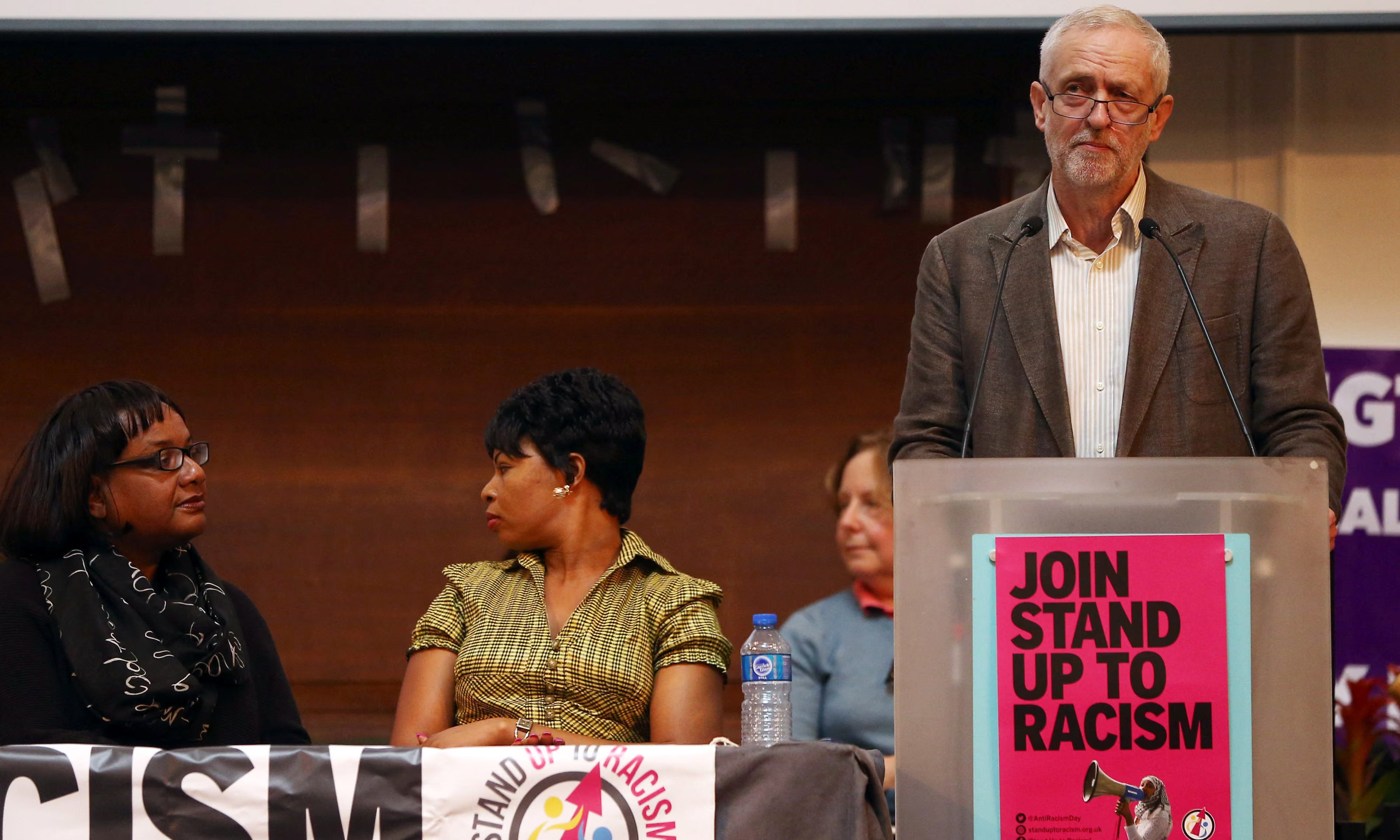
And it’s not like this was because the organisers of the old left were usurped or subverted. Many prominent old-left stalwarts like Jeremy Corbyn and George Galloway have wholly embraced the contemporary consensus on multiculturalism and diversity with as much zeal as any purple-haired millennial activist.
There remain economically left-wing voters who are patriotic, socially conservative or hostile to immigration. But voters are not an alliance partner: they possess no common leadership, institutions or programme through which nationalists could negotiate with them. Once they organise politically around sovereignty and national continuity, they generally cease to belong to the left and enter some form of national populism.
In rejecting a left-right alliance I am not rejecting the support of people like this. If anything, I have developed something of a reputation for arguing that the right should become more economically populist precisely so that it can appeal to such people. But winning former left-wing voters is not the same thing as forming an alliance with the existing left, and no such alliance is necessary to bring them into a nationalist movement.
Fascism and the Left
Those looking for historical precedents for a left-right alliance sometimes point to Fascist Italy or National Socialist Germany. Both movements drew a significant minority of their recruits from socialist, communist or syndicalist backgrounds. Mussolini had been a prominent socialist, and the early Italian Fascist programme was heavily influenced by revolutionary syndicalist and socialist ideas. The German National Socialists likewise appealed to sections of the working class, attacked finance capital and attracted some former Communists and Social Democrats.
Yet neither movement proposed a durable partnership in which left-wing organisations would retain their independence and exercise power alongside nationalists. Italian Fascism attacked socialist organisations and absorbed labour into institutions subordinated to the national state. The Nazis likewise treated the Communist and Social Democratic parties as enemies and abolished the independent trade unions. Leftists were invited to abandon the primacy of class, accept the nation as the political subject and enter a new movement on those terms. This was political conversion, not alliance.
The conditions under which this recruitment occurred were also very different. Interwar Germany and Italy were far more ethnically homogeneous and socially conservative than Western societies are today. The identity of the historic people could still be taken largely for granted, including by much of the left’s working-class base. Many ordinary left-wing voters were attached to socialist parties principally through questions of wages, ownership and working conditions. A worker could therefore move into a nationalist movement without reversing his position on the demographic and cultural questions that now divide left and right.
The situation today is almost the reverse. The organised left’s positions on migration, race, sex and minority identity are no longer incidental additions to an economic programme. They help define both its worldview and the coalition it represents. A contemporary leftist who accepts national preference, demographic continuity and the political primacy of the historic nation is therefore not merely changing his position on the relationship between labour and capital. He is abandoning principles that have become constitutive of left-wing politics.
Tucker’s Third Way?
The difficulty can be seen in Tucker Carlson’s recent attempt to articulate a programme for whatever follows the collapse of MAGA. After breaking with the Republican Party and promising to help build a third party, Carlson presented a ten-point vision of what America should become:
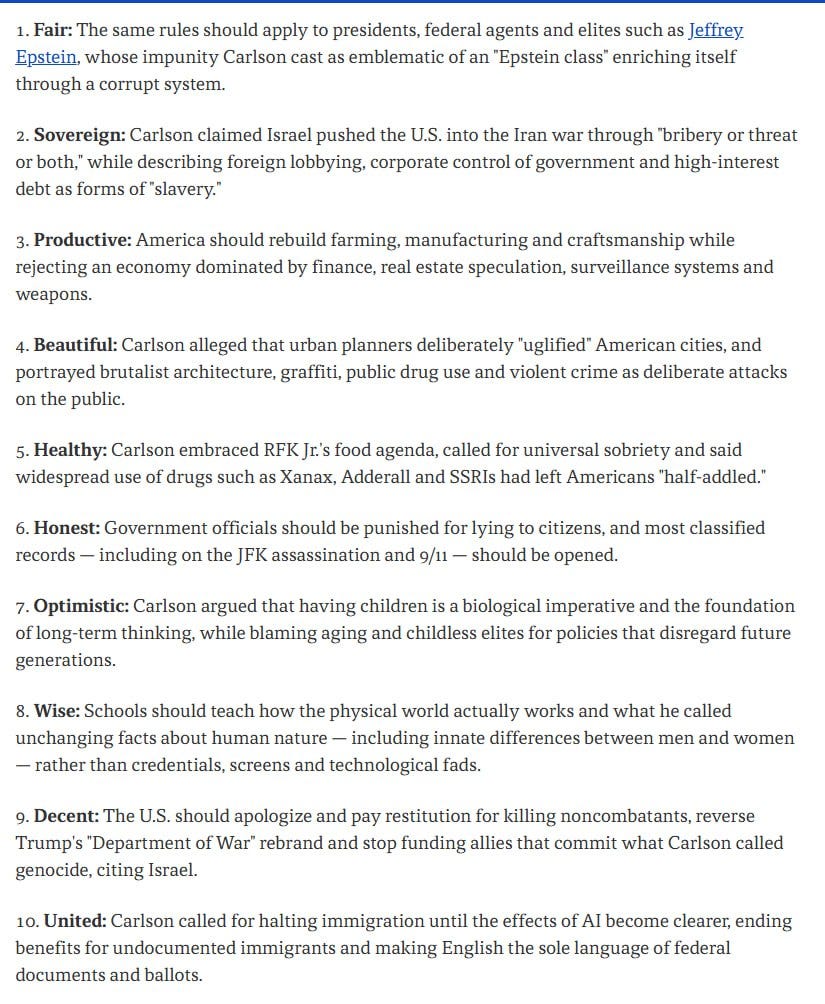
This was not a conventional political manifesto, instead attempting to establish the moral purposes around which a new political movement might be organised. Carlson attacked foreign influence, financialisation and usury, ugly cities, government secrecy, and the fertility collapse. It is easy to see why such a programme might be presented as the basis of a left-right alliance. After all, who would say they do not want fairness, a healthy population or an honest government? Who supports killing civilians in war as a matter of principle? But notice that Carlson’s ten points are all adjectives. They describe desirable qualities without identifying their political content. Everyone favours fairness in the abstract. Politics begins when we ask: fairness between whom, according to what standard and secured by which institutions? As soon as those questions are answered, the old left-right divides will emerge again, as will the centrality of the “equality thesis” and the impossibility of sidestepping it.
For the contemporary left, fairness means more than applying the same rules to everyone. Persistent disparities between racial, sexual and other identity groups are treated as evidence of structural injustice requiring political correction. Carlson appears to mean something closer to formal equality, the punishment of corrupt elites and an end to the impunity enjoyed by what he calls the “Epstein class”.
Implementing fairness in this negative, classical-liberal sense would nevertheless require more than a return to an agreed political norm. It would mean dismantling important parts of the contemporary civil-rights settlement and ending affirmative-action policies, diversity mandates and institutional efforts to produce proportional representation. The representation of some protected groups would probably fall sharply within particular elite institutions. Would left-populists such as Cenk Uygur and Jimmy Dore accept this as a return to sanity? If Carlson instead accepts the results of decades of anti-racist social engineering as the neutral baseline, his programme does not reconcile left and right. This is how the political ratchet operates. The left uses power to transform institutions; the right eventually accepts the transformation as the new neutral baseline and promises only to prevent the next turn of the ratchet. The same contradiction confronts anyone who promises a return to “colour-blind meritocracy” while accepting the existing civil-rights regime as a neutral settlement. A system that treats disparities between groups as presumptive evidence of discrimination will continually generate demands for race-based remedies.
The same problem runs through the other points. Sovereignty for the left may mean taking AIPAC out of politics, but for the right it also means deporting millions of illegal immigrants. Have any of the post-October 7 populist leftists come out in support of deportation efforts? Carlson’s programme therefore resembles the outline of a post-neoliberal right more than the basis of a left-right alliance. Its terms are broad enough to create the appearance of agreement only because the questions that divide left and right have been left unanswered. Even his apparently inoffensive points like asserting the normativity of the family and heterosexual marriage would mean a divergence with leftists that appear on his show like Cenk Uygur, who argues passionately for things like keeping transgenders in girls’ sports.
There may still be room for limited cooperation when a particular objective is shared, but a campaign or a social media mob can be confined to one question in a way that a political movement cannot. Nationalists can also appeal to former left-wing voters and incorporate economic demands once associated with the old left, but the organised left will never see this as anything but a cynical way to manipulate the working class.
The convergence since October 7 has opened new channels between people who previously inhabited separate political worlds, and some of that cooperation has already been valuable. A more radical online environment spanning parts of the left and right has helped normalise nationalist voices previously excluded by establishment gatekeepers. But a serious politics cannot be organised around a single grievance or a list of desirable adjectives. It must begin by answering the question that now sits at the centre of Western political life: who actually constitutes the people? As long as that remains disputed, agreement on secondary questions can only be superficial. The proposed left-right alliance dissolves precisely at the point where serious politics begins.
Thanks for reading. I can no longer take paid subscriptions on Substack, after losing access to Stripe and most payment processors due to being placed on a blacklist in a very grave case of ideological censorship.
If you want to continue to support my work please join the members club, where you can get access to member benefits, including my book Nationalism, the private members’ Telegram, mailbag submissions, and more:
Essay of the year candidate.
Great stuff