

Christopher Nolan’s The Odyssey is a dreary, joyless three-hour slog that has little interesting to say about its source material — or anything else.
I admit, I did hope this movie would fail. But I am a fan of Nolan’s films, and I fully expected to begrudgingly enjoy this, in which case I would have remained silent other than continuing to make fun of its woke casting and messaging. There is little to recommend about The Odyssey. I would rank only the awful Tenet below it; together, they are now the two great duds of Nolan’s career.
Much of the focus on this film prior to its release has been on casting, and for good reason. It would have been annoying but easy to overlook, if Nolan had thrown in a few African soldiers or merchants as background in this film, as he did in Dunkirk. But race-swapping Helen of Troy and the goddess Athena was an unforgivable act of cultural vandalism against European civilisation. It got to the point of ridiculousness with his casting of “Elliot” Page to play Sinon, a Greek soldier.
People have tried to downplay this since its release by saying these characters receive only a few minutes of screen time, but it is actually much worse than advertised. Lupita Nyong'o plays both Helen of Troy and her sister, Clytemnestra. Zendaya plays Athena. We are introduced to the story by a Black bard played by rapper Travis Scott, who also provides some hilariously bad music for the outro. Sinon, despite his limited screen time, is actually a pivotal character. Odysseus’ most loyal servant Eumaeus is played by a mixed-race Latino. There are Black Trojan and Greek soldiers; we see Agamemnon’s mixed-race child; one of the major suitors and antagonists is Black; and Odysseus’ crew is multiracial. One casting choice that has been little discussed is Indian actor Himesh Patel as Eurylochus, Odysseus’ right-hand man. But he ends up getting more screen time than any of the others, apparently being on screen for 30 per cent of the three hours. Also aboard Odysseus’ ship are an African and, most conspicuously of all, a man of East Asian descent.
It would be bad enough to do this to any ancient European epic, but it’s especially ironic that we get this smattering of the world’s races gathered aboard a single ship in a story whose drama depends upon the immense difficulty of travelling even between the islands and coastlines of the ancient Mediterranean.
These casting choices mean that far from being over and done with in the opening act, there are few scenes in which the diverse casting is not noticeable. Aside from the offensiveness of this for an adaptation of one of the foundational texts of European civilisation, it also breaks immersion in the ancient world Nolan is attempting to create. A particularly jarring example is an important scene where Sinon speaks to Odysseus from Hades. This is totally ruined by the ridiculousness of him evidently speaking to Odysseus with the voice of a frail woman.
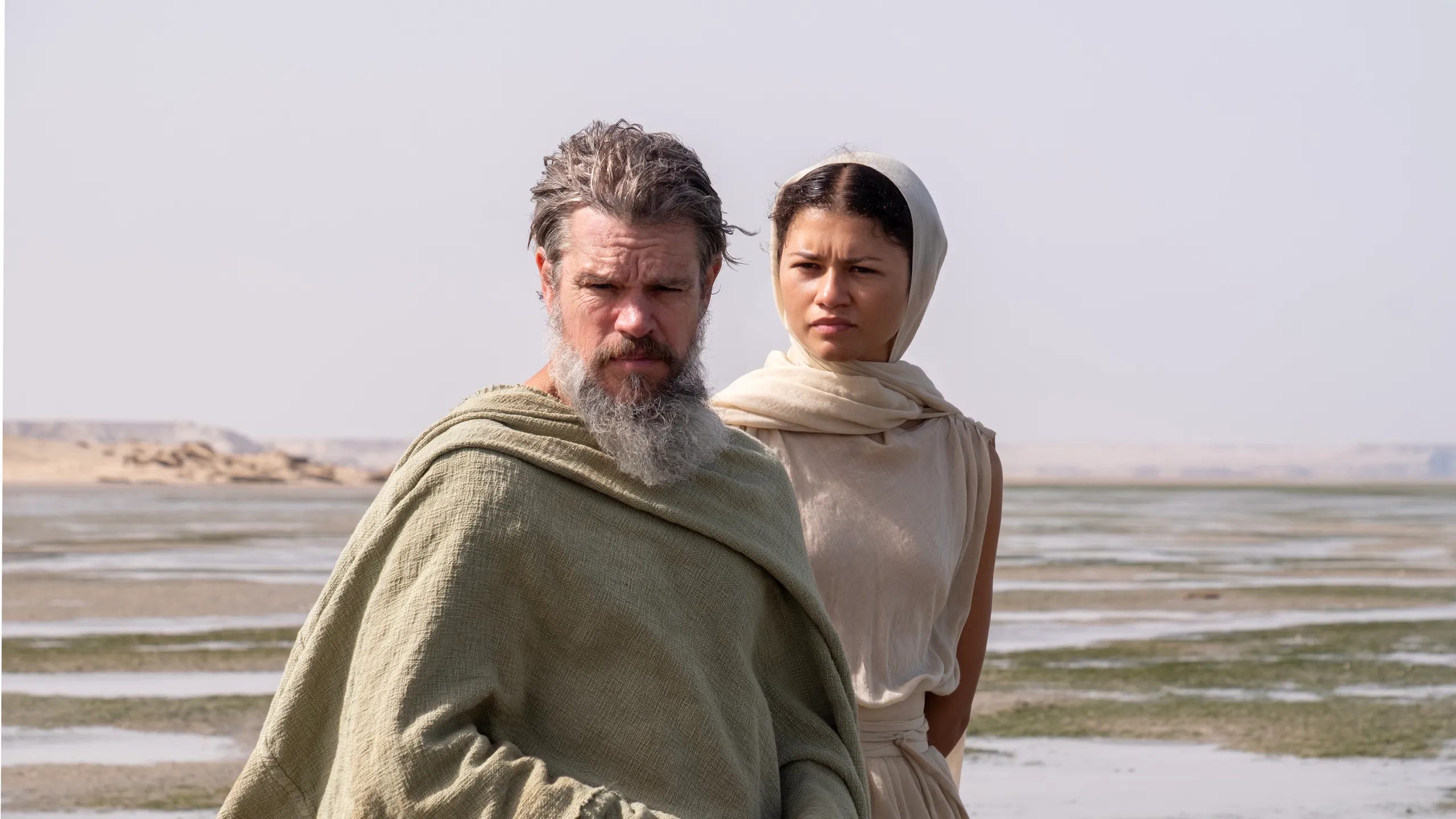
I didn’t love the cast outside of the diversity hires either. Matt Damon is not a convincing Odysseus. He delivers almost the entire performance with the same blank, pained expression, projecting weariness but little of the charisma and danger that should characterise Homer’s mercurial “man of many turns.” But this probably isn’t his fault. Damon may not have delivered a performance as Homer’s Odysseus, but this is Nolan’s Odysseus, a jaded war veteran, a middle-aged “dad” working through his trauma.
Tom Holland — an English actor forced to adopt an American accent for an adaptation of a Greek epic — seems equally out of place as Odysseus’ son Telemachus, coming across like a bright-eyed child and communicating remarkably little emotional depth throughout. Maybe Holland was joking when he said he only discovered after the film’s release he was supposed to be playing an adult rather than a 16-year-old, but it would explain a lot. Even his recognition of the father he has awaited his entire life, one of the story’s potentially overwhelming moments, lands with scarcely any force. Of course, this is not helped by the flat dialogue and decision to use modern American parlance, with Holland’s Telemachus repeatedly referring to Odysseus as “my dad.”
A bright spot is Robert Pattinson as Antinous, who brings a menace and a welcome theatricality to the role of principal suitor. His scenes have an energy that contrasts with the blandness of Holland and Damon, and offer a glimpse of a more vivid, dangerous film this might have been.
But even with a perfect cast, I would not have enjoyed this film. It is aesthetically lifeless and never feels like an epic, or anything that matches the scope its budget, director or source material promises. For a film so marketed on the strength of its visual spectacle, it is depressingly dreary and grey. Nolan has one of the most beautiful natural settings in the world as his canvas, yet this never looks or feels like it’s set in the Mediterranean. Its geography seems generic and vaguely northern: misty forests, drab fields, bleak rocky beaches and overcast coastlines that could belong almost anywhere. He even has Odysseus sailing around in a 115-foot Viking longship.
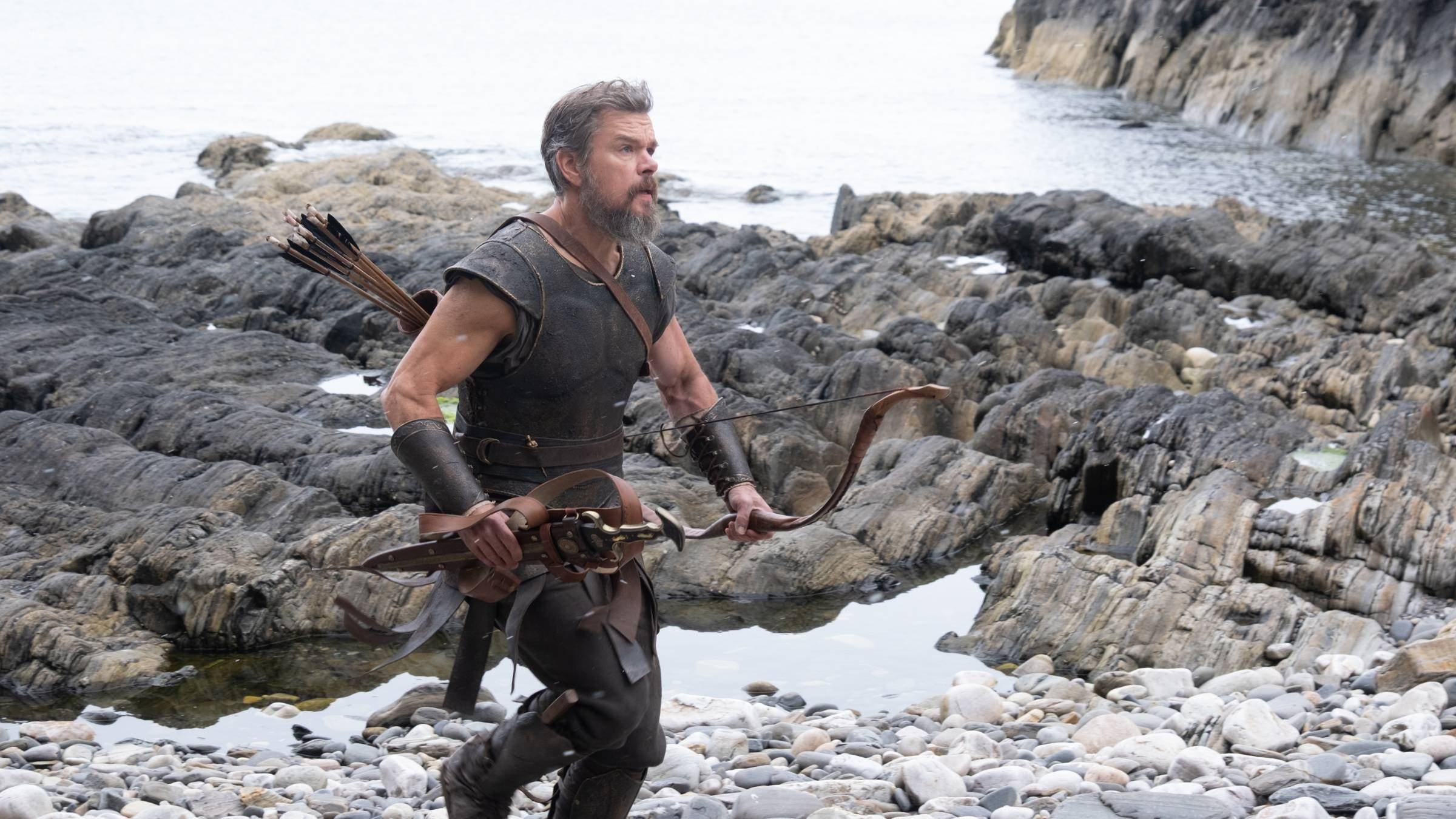
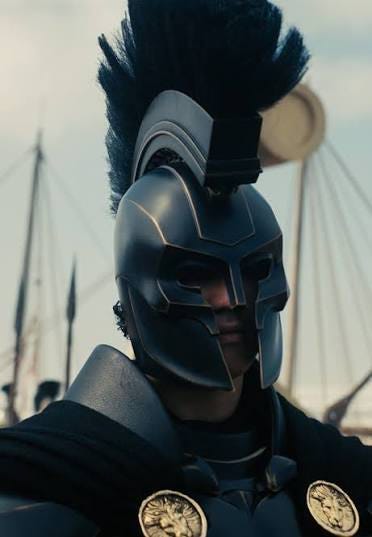
The beaches are grey, the water is dark, the sky is a washed-out pale blue, the grass is a sickly brown-green, and the sun looks uncannily dull. Even the sets of Bronze Age armour reflects the same muddy palette, looking like they are made out of tarnished scrap metal. Agamemnon’s armour, meant to especially stand out, looks like a big plastic Batman costume.
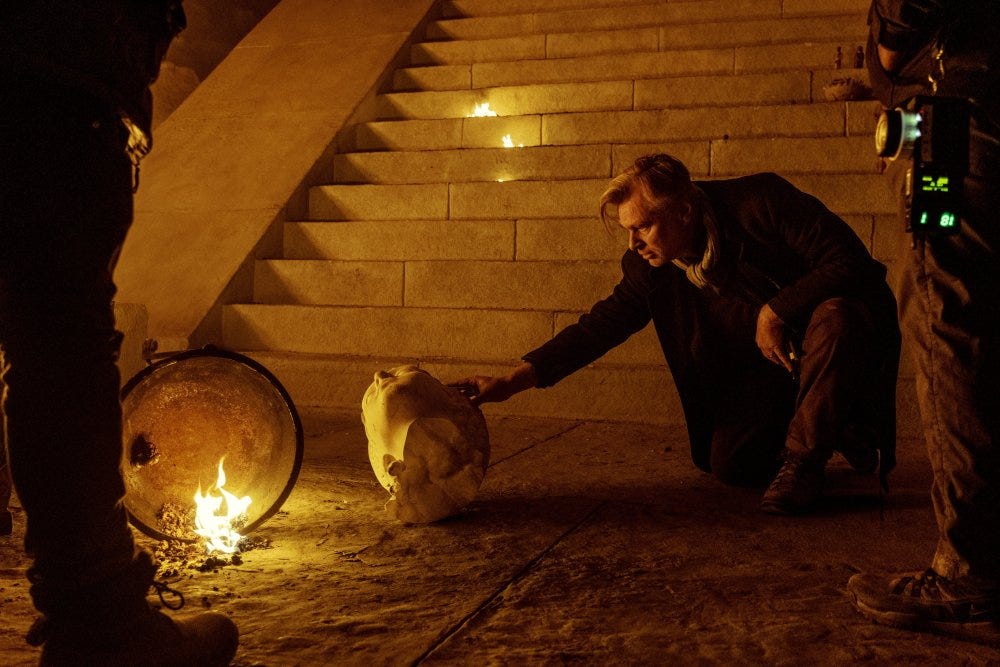
The sterile atmosphere is part of the reason the film never feels like a great epic. The Lord of the Rings trilogy gives the viewer a sense of a coherent world extending far beyond its central characters. Nolan’s Odyssey, by contrast, makes its secondary characters disposable, reduces its gods and monsters to mechanisms for advancing the narrative, and offers almost no impression of the ancient Mediterranean beyond sparse coastlines and the interior of Odysseus’ palace. The film presents an enormous journey through a world that never seems to exist beyond the places immediately required by its plot.
Another reason for the absence of epic grandeur from this film is that the trials of the characters are utterly devoid of joy. There is little mischief and scarcely any levity, while no one outside Odysseus and his immediate family receives enough development to make their eventual loss matter. Without quieter intervals of friendship, wonder or reflection, neither the world nor the stakes are given room to expand. The action consequently resembles a highlight reel of famous incidents Nolan is cycling through on the way to the climax. The film arrives at the Cyclops, Circe or the Sirens, supplies the anticipated image and moves onward before the encounter can acquire much dramatic or philosophical weight.
The treatment of these trials also reveals where Nolan’s vision diverges most sharply from Homer.
In Homer, Odysseus escapes the Cyclops Polyphemus by calling himself “Nobody,” but cannot bear to let the Cyclops believe that nobody defeated him. Once his ship is safely departing, and despite the pleas of his crew, he calls back across the water to announce that Odysseus, sacker of cities, was responsible. His hunger for kleos — the glory attached to a remembered name — allows Polyphemus to identify him and call upon Poseidon for vengeance. Odysseus is intelligent enough to become Nobody, but too proud to remain nobody.
In Nolan’s version, Odysseus turns back to fire an arrow at Polyphemus in a fit of anger to avenge the men the Cyclops has killed, despite having already secured escape for the survivors. The act is no longer an expression of heroic vanity but evidence that Odysseus remains trapped in “war mode,” instinctively answering every loss with retaliatory violence. Homer’s Odysseus is endangered by an excess of pride; Nolan’s by the psychological damage inflicted upon him at Troy. This Odysseus is not a masterfully cunning, dangerously self-assertive hero, but a familiar war veteran archetype like Chris Kyle in American Sniper.
Circe is subjected to a similarly modern reinterpretation. Nolan recasts the witch-goddess, who transforms Odysseus’ crew into pigs, as another victim of violent men. Her apparent vulnerability becomes a trap, and she later explains that she has not really transformed Odysseus’ companions so much as revealed their true nature. The metaphor could hardly be more obvious: beneath the armour, men are already swine, and Circe’s cruelty is merely the defensive response of a woman who has encountered too many of them.
We learned before release that Nolan was basing his adaptation on the feminist translation of Emily Wilson, so it’s not surprising to see this kind of reimagining of female characters. Perhaps Nolan was also inspired by Madeline Miller’s bestselling Circe, which similarly transforms Homer’s capricious sorceress into a victim of male violence who turns predatory sailors into pigs in self-defence.
Homer’s Circe, by contrast, is a dangerous, autonomous divine being who transforms men because she possesses the power and inclination to do so. Odysseus defeats her enchantment with Hermes’ assistance, confronts her with his sword, extracts an oath and then becomes her lover and guest. The encounter is obviously strange and morally ambiguous for a modern audience, but Nolan presents another predictable and safe parable about male violence and female trauma.
These revisions get to the heart of Nolan’s problem with Homer. He seems unwilling to let the ancient world remain genuinely alien to us. Whenever Homer presents something morally strange or metaphysically unsettling, Nolan translates it into a familiar modern category: heroic pride becomes combat trauma and divine caprice a defensive response to male violence.
One of Nolan’s calling cards is the insertion of extremely simple moral lessons beneath elaborate narrative structures. This isn’t necessarily a bad thing — Interstellar, with its simple message of the transcendent power of love, is one of my favourite films — but there could be no worse work on which to impose this approach than a foundational epic that has resisted reduction to a digestible moral axiom for almost three millennia.
Nolan applies the same reductive treatment to the Trojan War. Its violence is explained through the familiar language of trauma, while its political cause is translated into modern economism. Odysseus even tells Penelope that the war was not really fought to retrieve Helen, but to satisfy Agamemnon’s more banal desire to secure trade routes. Finally, it is revealed that the Athena with whom Odysseus has been communicating bears the face of a girl he witnessed being slaughtered at Troy, suggesting that the goddess is nothing more than a projection of his guilt. Nolan will allow us a glimpse of the gods only if they can be explained away as psychological symptoms.
The result is a pre-Christian epic awkwardly interpreted through a secularised post-Christian morality. The pagan ethos preserved in myth is genuinely alien to us: its heroes can be cruel, vainglorious and deeply unsettling. But that strangeness is precisely what should make presenting Homer to a modern audience so compelling. Odysseus should not be a responsible “dad” who just wants to return to civilian life. Nolan makes the ancient world accessible by removing almost everything that might disturb or challenge us.
Why, then, did the Greeks admire a character as morally ambiguous as Odysseus? The Greeks admired him because he embodies aretē: the excellence proper to a warrior, ruler and man struggling against impossible circumstances. He is courageous, resourceful and almost superhumanly enduring. He also possesses mētis, the cunning intelligence that allows a weaker man to defeat stronger enemies through disguise, deception and strategic patience. He survives, often through adapting best to circumstances that destroy others around him.
Odysseus is not morally canonised, but even his less attractive qualities belong to this excellence. His pride is the shadow of his greatness; his intelligence makes him an accomplished liar; and his ruthlessness enables him to defend what belongs to him. Homer does not ask us to admire each deed in isolation. Odysseus’ proper end is not to neuter his martial powers, but to return them to their proper object.
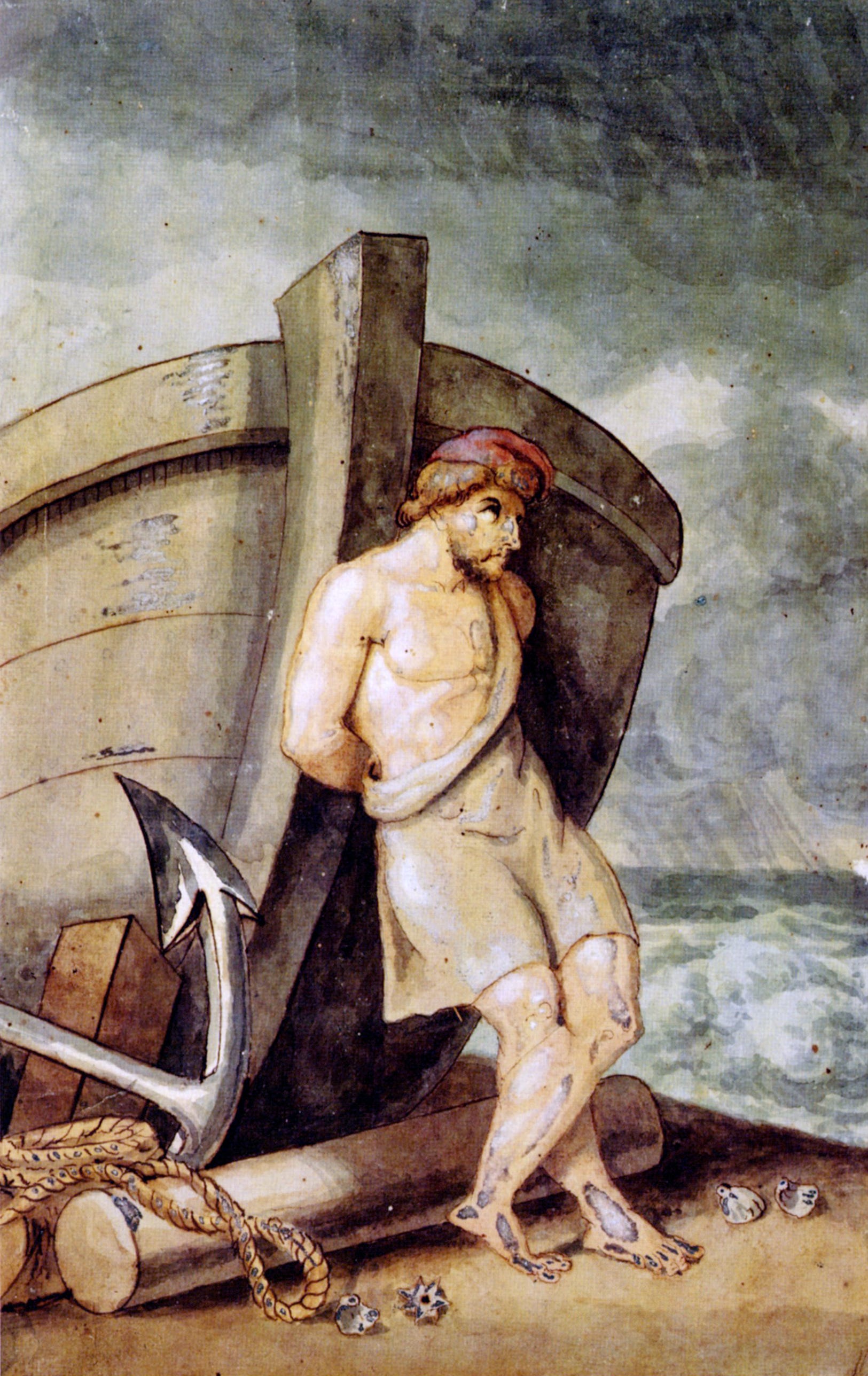
That object is Ithaca. For all his adaptability, Odysseus is among literature’s great figures of rootedness. He can assume innumerable identities and survive within radically different worlds, yet he never forgets the particular place to which he belongs. Calypso offers him immortality and eternal youth, but he chooses an ageing wife and a poor, rocky island. He prefers a finite life that is his own to an endless existence severed from his household, ancestry and name. In an age of globalism and a distrust of the rooted and familiar, an age of oikophobia, this is a powerful message, and one Hollywood has predictably deemed unfit for a modern audience. In fact, it is through examining this ancient relationship between a man and his home that we can best see the gulf that exists between us and the ancients.
This is best explored in Fustel de Coulanges’ The Ancient City. Coulanges presents an ancient world in which the household was not merely a private residence or source of emotional comfort. It was simultaneously a family, religious institution and political order. Its hearth was sacred, its land contained the ancestral dead, and its descendants maintained the rites joining past and future generations. Coulanges clarifies the true stakes of Odysseus’ homecoming. For the ancient man, “Whatever man held most dear was associated with the idea of country. In it he found his property, his security, his laws, his faith, his god. Losing it he lost everything.”
Odysseus does not merely miss Ithaca as a modern expatriate might miss familiar surroundings. Without Ithaca he possesses no settled identity at all: he is separated from the land of his ancestors and gods, and thus separated from his own authority and place within the divine order. This is why the suitors’ occupation of his palace is so grave. They consume his estate, solicit his wife, plot the murder of his heir and threaten to extinguish the continuity of his sacred household. In killing them, Odysseus does not merely take revenge. He restores the network of relationships through which he exists as Odysseus, and which served as the sacred foundation of the ancient world.
Nolan continually tells us that Odysseus wants to go home, but here there is nothing very profound about this homecoming. Ithaca is just the place where his wife and son happen to live. The dialogue reiterates the family’s desire for reunion without conveying any religious, ancestral and political significance of what has been lost. We understand that Odysseus misses his family, but not that exile has deprived him of his place within the order of existence. Even the 2004 Troy, a heavily modernised Hollywood adaptation, allowed its heroes to desire things modern audiences might find alien, like Achilles knowingly exchanging the promise of a long and happy domestic life for immortal glory. The Odyssey could have been an exploration of the opposite but equally ancient choice: Odysseus sacrificing eternity to recover the particular place in which his name has meaning. Nolan is not interested.
This reinterpretation also changes the dramatic character of Odysseus’ homecoming. Following Athena’s counsel, he finally relinquishes control and allows the water to carry him back to Ithaca. The literal event has a Homeric precedent: the Phaeacians transport Odysseus home while he sleeps. But in Homer, this divinely favoured passage rewards a long demonstration of cunning, endurance and heroic excellence. Nolan instead frames it as another therapeutic lesson in surrender, with the traumatised warrior reaching home only after submitting to the guidance of his female conscience. This displacement of heroic agency by psychological acceptance helps explain why the film feels so diminished as an epic. Our hero does not finally overcome the forces opposing him, but learns to stop resisting them.
So what message does Nolan want us to take? The answer is supplied by the moral refrain Nolan invents for the film: “Zeus’s Law,” which he says was how he simplified the Greek concept of xenia for a modern audience.
Characters repeatedly invoke it before it is finally stated in the unmistakably Christian language of the Golden Rule: “Do unto others as you would have them do unto you.” Having stripped Homer’s world of its metaphysical strangeness, Nolan replaces it with the safest and most universally acceptable moral lesson imaginable: be kind to strangers. In case there was any doubt his message was this uninspired, he has reiterated it in promotional interviews. But for the Greeks, xenia was not an abstract command to extend indiscriminate kindness to every human being. It was a reciprocal relationship between guest and host, structured by ritual, status, gift exchange and the possibility of punishment by Zeus Xenios.
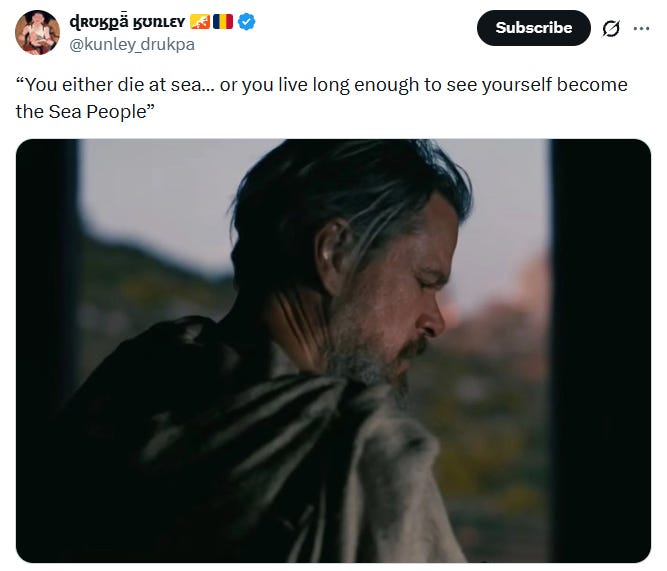
Nolan tries to give this Golden Rule civilisational significance by making the sack of Troy its primal violation. As Odysseus finally confronts his repressed guilt, we see the Greeks cease to regard the Trojans as men to whom moral restraints apply, turning a war into what he calls a “hunt.” Brutalised by what they have done, the returning warriors become the mysterious People from the Sea, spreading disorder throughout the Mediterranean and contributing to the Bronze Age Collapse. Troy therefore functions as Nolan’s secular original sin: by opening its gates, Odysseus releases a violence he cannot contain. The Greeks leave morally fallen, and the destruction of Troy precipitates a collective expulsion from Eden as the high civilisation of the Bronze Age descends into centuries of darkness. Odysseus’ geographical exile becomes the personal expression of mankind’s exile from a lost order. Again with Nolan, it’s all very Christian — or more precisely, the moral architecture of Christianity after transcendence and spiritual redemption have been removed.
But just in case this point had not been made sufficiently clear over the preceding three hours, we are treated to the most ridiculous example yet of Nolan’s familiar expository dialogue. Odysseus solemnly tells Penelope that “our age of bronze is collapsing,” because of the people from the sea, in what must go down as the single most absurdly anachronistic line ever written for a character in a historical epic.
Nolan’s Odyssey concludes with one final inversion of Homer’s hero. No sooner is he back in Ithaca and reunited with his family than he decides to set sail again with Penelope: partly to honour his fallen men, and partly to fulfil a promise to her made before his departure that they could one day sail the seas aimlessly, content with each other’s love. It’s so Nolan I half-expected an after-credits scene in which an old servant spots Odysseus drinking wine with Anne Hathaway at a distant café and silently nods. Bruce Wayne and Odysseus both reached bourgeois Boomer completion and retired for a life as perpetually holidaying wife guys.
This completes Nolan’s transformation of Odysseus from a hero endangered by the excess of his virtues into a veteran damaged by the exercise of them. Homer’s problem is how cunning, pride and martial violence can be brought back into the service of household and kingdom. Nolan’s adaptation ends with a parting of them.
For all its promised spectacle, Nolan’s Odyssey never truly transports us to the ancient world. It gives us a picture of that world, sterilises it, and sends it back wearing the moral psychology of therapeutic modern society. After three dreary hours, the man of many turns has been reduced to one familiar lesson: be kind, process your guilt, listen to women, and know when to step aside.
You should not pay money to see this film on principle. If you watch it at all, I recommend watching it on a small screen, where the IMAX spectacle cannot conceal just how hollow the film beneath it really is.
Excelently written, bravo. It once again shows that the real exciting discussions and interesting observations are only found within the dissident right culture beyond mainstream slop. Especially in topics about idendity and oneselfness - thanks to guys like you - we are the gold standard.
What makes this critique stand out is that you didn't just stop at the surface-level casting complaints; you grounded the critique in what Ithaca actually meant to an ancient Greek. Bringing Fustel de Coulanges' The Ancient City into the mix perfectly illustrates what Hollywood misses: that exile wasn't just 'missing your family,' but a disruption of spiritual and civic order. Excellent use of historical framework to expose the hollow worldview of the film.